Civilization VII - title

A few weeks ago (or I guess more than a month ago, at this point -- geez I'm slow at writing these), Firaxis released it's "Test of Time" update for Civilization VII. Civ VII players can now finally play as the same civilization throughout the entire game, which addresses one of the player base's biggest criticisms with the game. The internet is now abuzz with the question of whether or not this patch "fixes" or "saves" Civilization VII. From what I've seen so far, it seems to be very well-received, with many internet pundits saying (or implying with their YouTube thumbnails) that Civ VII is "fixed".

Test of Time certainly is a good update. The biggest change is that players now have the choice to play as any civilization in any age, and can choose to play as the same civilization for the entire game, if you choose. To accomplish this, Firaxis gave every civilization an "apex age" in which they are the most powerful. During the apex age, their abilities are the strongest, and they have access to all of their unique units. During non-apex ages, each civ has less powerful versions of their ability, and they are stuck with stock units.

Players can now choose to keep the same civilization when transitioning into a new age.

This approach is similar to Humankind, which also gave players the option to stay as the same culture when progressing to a new era. The big difference is that in Humankind, staying with the same culture would give that culture the same generic bonus every time; whereas in Civ VII, each civ still has a unique ability, it's just a weaker version of their apex unique ability. So Civ VII's approach is a little bit more flavorful in that regard. Basically, Humankind's version of this feature was (as far as I can tell) just a fall-back option if all the good cultures have already been selected by other players. If you don't want any of the available cultures, you can just stay as the same culture, and continue to field their unique units and build their unique infrastructure, and get some small buff. In Civ VII, by contrast, sticking with the same civ is framed as a more assertive decision. You choose that civ because you want their abilities, not simply because you don't want the other civs.

Personally, I still prefer Humankind's method of culture-switching over Civ VII's. I prefer how it is tied to the individual civilization's progress through the eras, and doesn't stop the game at arbitrary points to force everyone to switch. I also like how there's a competitive, first-come-first-serve aspect to switching cultures in Humankind, which lights a fire under the player's butt to make sure to advance fast enough to get a prime pick of the upcoming era's cultures. Humankind's approach feels like a much more organic and natural part of the game that doesn't interrupt the game's pacing at all (but in fact, adds to the pacing). This is in stark contrast to Civ VII's design, which feels forced, arbitrary, and exceedingly "game-ified".

But perhaps a full analysis of Humankind's culture-switching compared to Civ VII should be the subject of another essay, similar to what I did with Civ VII and Ara: History Untold... For now, I want to talk about Civ VII specifically.

In addition to being able to play civs outside of their apex age, Test of Time completely replaces the Legacy paths with new, more granular and more varied "Triumphs". These are smaller goals and milestones that unlock dedication bonuses for the next age. This is intended to add more variety to each age, and make it so that players don't feel like they're following the same rote steps to achieve the same 4 goals every time they play.

Legacy paths were replaced with more varied and granular Triumphs.

Again, this is a good change.

[More]
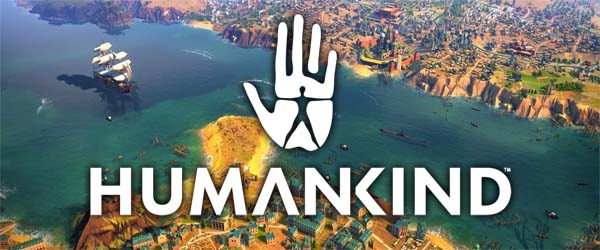
Humankind - title

It's going to be virtually impossible to review Humankind without frequently comparing it to iterations of Sid Meier's Civilization. Civ has absolutely dominated (and almost completely monopolized) the historical turn-based strategy genre. There have been plenty of space and sci-fi-themed 4x strategy games, ranging from Master of Orion, to Galactic Civilizations, to Stellaris, and even Amplitude's own Endless Space; but not a whole lot in the more Earth-bound sub-genre. I've also been a huge Civ fan (as the readers of my blog can no doubt tell), so it's hard for me to look at any game in this genre and not partially judge it through the lense of comparing it to Civ.

So I'm not even going to pretend to judge Humankind strictly on its own merits, in a vacuum. I simply can't. I'm not sure if anyone can. Amplitude, as a company, clearly looked to Civ for inspiration, took lessons from the successes and failures of its previous strategy games, and said "hey, we want a piece of that pie too." But despite the surface-level comparisons to Civ, Amplitude takes a very different approach to game design. While Civ has always been very firmly rooted as a "digital board game", Humankind takes a much more story-driven and "simulationist" approach, akin to the sort of thing that you might see in a game like Crusader Kings. I think this approach works, and it does a good job of separating Humankind from Civilization.

Culture wars

Perhaps the biggest deviation that Humankind makes from Sid Meier's Civilization is the way that it handles the game's civilizations themselves. In Humankind, you don't play as a single civilization throughout an entire campaign. Instead, each era you have the opportunity to select a new culture from a list of era-specific cultures. I like this concept a lot in principle, but also have some misgivings about the way it works out in practice.

Empires transition into a new culture at the start of each era.

On the one hand, it's great to see a game like this recognize the fact that civilizations aren't singular, monolithic cultures that exist forever, unless they are conquered or die off completely. That gaming paradigm (which Civ has always embraced) ignores the reality that cultures change and evolve over time. They change with the times, and blend elements from other neighboring cultures. And even if a nation or empire falls or collapses, it doesn't just disappear off the face of the planet overnight. It's people get absorbed into whatever nation or empire replaces it, and those people continue to influence the development of that new culture.

But this isn't exactly how Humankind works. The cultures of the game don't gradually transition or evolve due to social, economic, political, or geographic pressures and influences. Instead, at arbitrary points throughout the game, each empire completely changes its culture in a single game turn. And you aren't locked into choosing a related or similar culture either. You can pick any culture that is still available from the given era, no matter how separated that new culture might be from your old culture -- whether that be geographic separation, ideological separation, or even racial separation. I can be Greek one turn, and then suddenly be Aztec the next, and be Khmer the following era.

I was hoping for a system in which players would have to select from a list of related cultures when transitioning into a new era. For example, I was imagining that being Classical Romans means that, when the medieval era hits, I would have to chose between a related culture like Byzantine, Holy Roman, Ostrogothic, Franks, or Papal States. Then, depending on which I picked, my culture would continue to shift to another related culture in the following era. For example, if I picked Byzantine as my medieval successor to Rome, then my early modern culture choices would be things along the lines of the Ottomans or Orthodox Rus; whereas, if I had gone with the Papal States or Holy Roman Empire, then my choices would be things like Venetian, German, or French.

Changing cultures each era is no more silly than ancient
Abraham Lincoln leading ancient America in a bear-skin hat.

Instead, these transitions from one culture to another over the span of a single turn can be very jarring in Humankind. But I guess it's no less jarring than seeing an ancient era Abraham Lincoln leading America in 4000 B.C.E. while wearing his silly bearskin tophat.

I hope that if Humankind gets expansions, that those expansions will modify this culture-changing mechanic so that there are more cultures available each era, but your choices are limited to cultures that are related to the one you were playing in the previous era. Maybe it costs influence (or maybe even fame) to change cultures, and changing to an un-related culture costs more than changing to a closely related one. I know it can be difficult to find such examples of related offshoots for every possible culture, especially for cultures that were conquered or died off in real life, but I think it's a solvable problem.

It's easy to come up with possible successors to the Roman Empire, because every culture in Europe and Asia Minor seemed to claim succession from Rome. It's a lot harder to come up with related successors to culture like the Aztecs or Maya, and it would seem insensitive or outright offensive to limit the choice of succession to the colonial European cultures that had conquered or massacred them in real history. But there are options. In the case of the Maya or Aztecs, successor options could include cultures like the various Pueblo or Navajo cultures, but I admit that's kind of a stretch.

[More]
Grid Clock Widget
12      60
11      55
10      50
09      45
08      40
07      35
06      30
05      25
04      20
03      15
02      10
01      05
Grid Clock provided by trowaSoft.

A gamer's thoughts

Welcome to Mega Bears Fan's blog, and thanks for visiting! This blog is mostly dedicated to game reviews, strategies, and analysis of my favorite games. I also talk about my other interests, like football, science and technology, movies, and so on. Feel free to read more about the blog.

Check out my YouTube content at YouTube.com/MegaBearsFan.

Follow me on Twitter at: twitter.com/MegaBearsFan

Patreon

If you enjoy my content, please consider Supporting me on Patreon:
Patreon.com/MegaBearsFan

FTC guidelines require me to disclose that as an Amazon Associate, I earn from qualifying purchases made by clicking on Amazon product links on this site. All Amazon Associate links are for products relevant to the given blog post, and are usually posted because I recommend the product.

Without Gravity

And check out my colleague, David Pax's novel Without Gravity on his website!

Featured Post

Exploring strange new ludic genres of Star Trek (on Patreon)Exploring strange new ludic genres of Star Trek (on Patreon)09/08/2025 2 years ago, after playing both Star Trek: Resurgence and Star Trek: Infinite, I started thinking about how the ludic genres of "point-and-click"-style adventure games and grand strategy games are both very good ludic genres for the Star Trek IP. I had originally planned on creating a short, 20-30 minute video talking about...

Random Post

How Team Silent created relatable and memorable characters for its 'Silent Hill' gamesHow Team Silent created relatable and memorable characters for its 'Silent Hill' games02/24/2013 One of the greatest strengths of the early Silent Hill games - developed by internal Konami studio Team Silent - is their exceptional character design. The characters presented in these games are among the best in all of gaming history at illiciting emotional responses from the players - both positive and negative. It all starts...

Month List

Recent Comments

Comment RSS