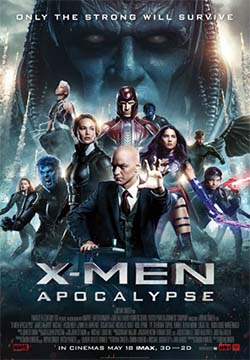
There's a bit in X-Men: Apocalypse in which Cyclops, Jean Grey, Nightcrawler, and Jubilee are walking out of a theater after seeing Return of the Jedi. Cyclops and Jubilee are arguing about whether Empire was better than Star Wars, and Jean remarks that "we can all agree that the third one is always the worst". This, of course is a jab at X-Men 3: the Last Stand, which I'm sure we can all agree is still the worst of the X-Men movies. It's also the first one that Bryan Singer didn't direct. But what might - or might not - be lost on Singer and his writers is the little bit of irony that Apocalypse is also the third movie in a series: the prequel series that started with X-Men: First Class.
X-2 and Days of Future Past remain the standout excellent films in this particular franchise. I don't think that Apocalypse ever degrades quite to the train wreck that was The Last Stand - not even close. But it does fall victim to some of the same traps that The Last Stand fell into: namely that it perhaps tried to fit too many stories into one, and doesn't tell any one of them particularly well. Much like The Last Stand, this one even starts to fall on its face when it goes into "Dark Pheonix" territory. Thankfully, they avoided turning that into a major plot thread though...
Perhaps the clumsiest storyline here was the Four Horsemen themselves. As per the comics, Apocalypse must recruit four powerful mutants, amplify their powers, and then use them as his own personal bodyguards. Other than Magneto, these characters' introductions and development all had to be rushed through. It seems a bit ironic that in these movies, it always seems to be the characters that we're most familiar with who get the most set-up and exposition; while the new characters receive little-or-no explanation or development. I never really bought into these horsemen though, or why they would be willing to help this obvious villain. I get that he tricked some of them with promises that he would "save humanity from itself", and he earned some loyalty with others by healing them and making them stronger, and that he used Magneto's grief and anger to his advantage, but the moment his plans started shifting away from "destroying corrupt systems and governments" towards outright "destroy the world", I just couldn't believe that none of the others batted an eye! Was there some kind of mind control going on as well? But he doesn't have mind control powers; that's why he wants Professor X.
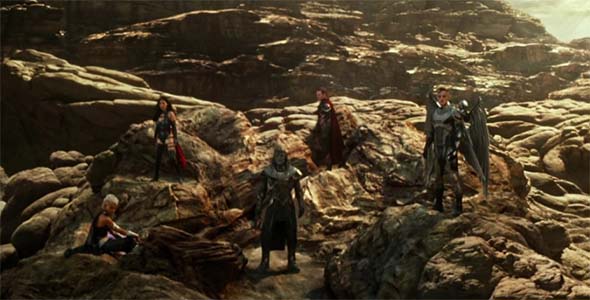
Aside from Magneto, The Four Horsemen felt undeveloped and lacking in motivation.
Maybe if the movie could have established that Apocalypse had somehow brainwashed them, then I'd be more willing to accept it...
[More]
85b2663c-484f-4da7-a67a-5b36565475e8|0|.0
Tags:X-Men, X-Men: Apocalypse, Bryan Singer, 20th Century Fox, Marvel, Marvel Comics, prequel, sequel, retcon, Apocalypse, four horsemen, mutant, Magneto, Storm, Archangel, Psylocke, Charles Xavier, Cyclops, Jean Grey, Beast, Hank McCoy, Nightcrawler, Mystique, Wolverine, Weapon X, Quicksilver, Jubilee, Pheonix, James McAvoy, Michael Fassbender, Oscar Isaac, Jennifer Lawrence, Evan Peters, Sophie Turner, Olivia Munn, Lana Condor, Hugh Jackman, Star Wars, Star Trek, Who Mourns for Adonais?