I admit, I only kind of half pay attention to the new Star Wars and Marvel shows on Disney Plus. Both have so thoroughly over-saturated the market that there's just no excitement about either franchise anymore. A lot of the stories in Star Wars in particular feel like they're scraping the bottom of the barrel for any idea that some bean-counter feels is worth filming. Marvel at least has the advantage of progressing a continuous narrative forward, even if it's currently moving at a glacial pace. Star Wars is widely regarded as having shat the bed with the sequel trilogy (I still haven't bothered to watch Rise of Skywalker), so now it's completely fixated on just back-filling the details adjacent to the parts of the franchise that were actually good, while insisting that the same handful of characters have their hands in everything important that has ever happened in this universe. Anyway, sorry for the Star Wars tangent; I'm supposed to be talking about a Marvel show right now. I wonder how long it will be before Disney gets so desperate that they start crossing-over Marvel and Star Wars?
Anyway, the point is that I've been kind of "meh" about almost everything that Marvel has put out since Infinity War. So "meh" that I couldn't even be bothered to write reviews or impressions of most of it. So much of the content just feels like it's running in place from a narrative standpoint, or that it's just an elaborate setup and tease for bigger, more important future content. Just get to the Fantastic 4 and X-Men and Kang the Conqueror or Dr. Doom or whoever the next big bad Thanos-wannabe is going to be already!
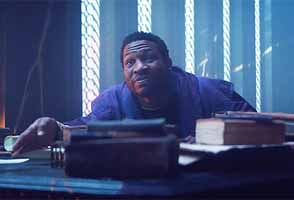 Loki Episode 6, © Disney, Marvel.
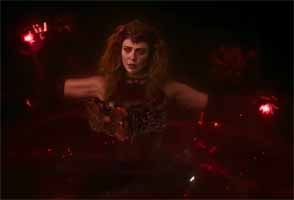 WandaVision Episode 9, © Disney, Marvel.
Marvel's shows feel largely like teases for the good stuff that's still just over the horizon.
I went into She-Hulk expecting more of the same: a show that serves only to bridge the gap between Endgame and whatever is next, instead of really being a story in its own right. But after a couple episodes of only half watching, I found myself putting my laptop away and actually paying attention as we got further and further into the season. The reason is that She-Hulk doesn't feel like filler content; it feels like an actual TV show that exists for its own sake and is content to tell its own story.
Yeah, sure, it's still tied into what's going on in the broader Marvel universe. OG Hulk gets kid-napped by aliens and disappears for most of the series, which is definitely a tease for some bigger things happening out in the periphery. But while shows like Loki seemed to exist only to build some interest and intrigue about what's going to happen next, She-Hulk is just a show about Jennifer Walters coming to terms with her new, public identity as She-Hulk.
This leads to a more personal, intimate super hero story than I'm used to seeing from the never-ending parade of comic book movies that always have to have apocalyptic stakes. Yeah, sure, Spider-Man deals heavily with Peter Parker balancing his personal and social life with his hero duties, but the focus on teenage and high school drama isn't something that I relate to as much anymore. And yeah, both WandaVision and Loki get very personal, but neither of those allow us to see the heroes living their lives in real life. They both take place in highly exaggerated or outright fictional realities. So She-Hulk feels different. It's largely about Jennifer Walters' life now that she is a super hero. Not her life as a super hero; her normal, everyday life since becoming a super hero. [More]
Where can the Marvel Cinematic Universe go after Thanos? My vote is for Doctor Doom to be the next overarching big baddie now that Disney owns Fox (and the Fantastic Four license). Thanos already successfully wiped out half of all life in the universe, and despite the Avengers gaining access to a time machine, they did not undo any of that! How do you up the stakes going into the next phase of Marvel movies?
Well, introducing a multi-verse seems like the logical next step.
It's so logical, in fact that Marvel didn't even seem to hide the idea in Far From Home's marketing. The second trailer, which I think premiered within a week of Endgame's release, pushed the multi-verse idea hard -- as well as spoiling Tony Stark's death for anyone who hadn't made it out to see Endgame within that first week.
It's all spoilers from the next paragraph on. If you haven't seen the movie yet, then I recommend it. It's good! Not Into the Spider-Verse good, but Far From Home is one of the better Marvel movies, and Mysterio is totally awesome.
The Far From Home trailer spoiled the multiverse and death of Tony Stark within a week of Endgame's release.
... [More]
80a6e70e-02af-4c55-9a2d-e5313863e5aa|1|5.0
Tags:Spider-Man, Spider-Man: Far From Home, Sony, Columbia Pictures, Marvel Comics, Peter Parker, Quentin Beck, Mysterio, May Parker, Tony Stark, Iron Man, Nick Fury, Tom Holland, Jake Gyllenhaal, Samuel L Jackson, Zendaya, Jacob Batalon, Marisa Tomei, parallel universe, multiverse, illusion, advertising, marketing, Avengers: Endgame
If Infinity War was the Empire Strikes Back of the Marvel Cinematic Universe, then Endgame was poised to be the MCU's Return of the Jedi. RotJ was a "good enough" capstone on a legendary film series, and that's pretty much where my expectations for Endgame sat. Endgame exceeded my expectations. It's far more than just a "good enough" sequel, though it's still not as good as Infinity War.
Endgame could very easily have just been a movie about all the heroes picking themselves back up after being knocked down in Infinity War, coming together, going after Thanos, and beating him up for two hours. Then they get the Infinity Gauntlet and snap all the dead heroes and people back into existence. No harm done, happy ending for everyone.
Not the case.
Several of my friends suspected that Thanos would remain the point-of-view character, and that he, himself, would be overcome with grief and regret over having killed Gamora. That Thanos would actually be the one to undo everything, redeeming himself in a way similar to Darth Vader. That didn't happen either. The point of view has shifted completely back to our heroes -- what's left of them.
Thanos' grief is not the subject of the movie, nor does he spend the movie gloating. Grief is, however, the overarching theme of Endgame, which handles the subject with maturity and nuance -- at least, up until its morally muddled ending (more on that later). The Marvel movies have always included themes of family, and the lengths one would go for family. Endgame explores how we deal with the loss of family, the grief and depression that comes with tragedy, the trauma and guilt of failing to protect those you care about. It's powerful stuff, and it pulls no punches.
The end credits went full-blown Star Trek VI.
And I totally cried when the movie went full-blown Star Trek VI with its end credits. It's too bad they didn't include the Stan Lee marvel logo that was included in Captain Marvel. This being the capstone MCU movie that everyone is going to see, I feel that tribute would have served this movie well. Or maybe put that tribute at the end of the movie, along with the other credits. Ah well.
It's hard to talk any more about this movie without going into spoiler territory. So I'm going to start with minor spoilers and work my way up to the more major ones. If you haven't seen the movie yet, then you can close this page now and know that I give it my fullest recommendation. Otherwise, feel free to read on, but know that things are going to get increasingly spoiler-y as I go on. Feel free to stop if you feel like you're about to read something you don't want to hear.
The remaining heroes must deal with the grief and guilt of having failed to stop Thanos. [More]
601d3ac2-4081-4c66-8479-582e4b972f43|2|5.0
Tags:Avengers, Avengers: Endgame, Marvel, Marvel Comics, Thanos, Infinity Stone, Infinity Gauntlet, Captain Marvel, Captain America, Iron Man, Hulk, Thor, Black Widow, Ant Man, Hawkeye, Rocket Racoon, Nebula, time travel, paradox, grief, depression, trauma, beer belly, Star Trek VI: the Undiscovered Country
I'm late to this party. With Avengers: Endgame due out in the next couple weeks, I finally got around to seeing Captain Marvel. I had planned to see it with a friend the week after release, but illness and work got in the way, so we never made it out. Also, I just haven't been out to movies much since being blown away by Into the Spider-Verse -- seriously, it's out on home video and streaming, go watch it! There's a few other movies that I've been wanting to see, and I'm going to try really hard to not miss them in theaters. I'm really looking forward to Jordan Peele's new movie, Us, which I'm hoping to see this week or next. And apparently, DC's Shazam! might actually be good?!
But I finally had a weekend afternoon to myself, and decided to go to Captain Marvel, since my girlfriend didn't want to see it. As is par for the Marvel movies, it's good enough. Marvel has yet to produce a true flop, but I feel like Captain Marvel is a bit of a regression considering the studio's recent track record.
I like when the Marvel movies experiment with genre, but Captain Marvel remains a pretty standard fare origin story.
The big problem is that we're back to origin stories. Spider-Man: Homecoming smartly passed on re-re-telling the story of how Peter Parker became Spider-Man, and was all the better for it. Recent movies like Black Panther, Guardians vol. 2, and [especially] Infinity War, had moved beyond the dull origin stories and un-interesting, cookie-cutter villains to offer truly engaging and transcendent films. Captain Marvel kind of falls in with Doctor Strange as being a passable -- but ultimately skippable -- entry. At least it isn't as contradictory as Doctor Strange.
... [More]
a7c81d27-a998-4170-a911-a06da1288540|0|.0
Tags:Captain Marvel, Marvel Comics, Disney, Stan Lee, Avengers, Brie Larson, Samuel L Jackson, Nick Fury, Skrull, feminism, refugee, Blockbuster Video, 1990s, cat
A couple weeks ago, I heaped praise upon the Spectacular Spider-Man TV show, saying that it "might be the best media adaptation of Spider-Man, period!". I still believe that holds true, but Sony's Into the Spider-Verse definitely gives Spectacular a run for its money.
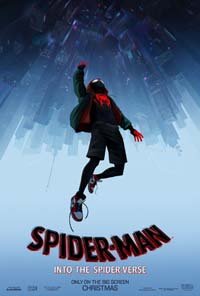
Spider-Verse isn't really an adaptation of any of the Spider-Man comics. Not the original Amazing comics, or even the more recent Ultimate comics. It's a completely original story featuring the modern Ultimate Spider-Man, Miles Morales, the son of an hispanic nurse and a black cop in New York. So in that sense, Spectacular remains the most faithful adaptation of the original 60's and 70's, Stan Lee and Steve Ditko comics featuring Peter Parker. I was kind of hoping to see a Josh Keaton Spectacular cameo in this film, but no such luck. Damnit, Sony, bring back Spectacular Spider-Man! Make it happen!
I also said in the Spectacular review that Spider-Man (and perhaps all comic adaptations) are best-suited to television shows in which the long-form, character-driven storytelling of comics can be allowed to play out. Into The Spider-Verse, however, proves that Spider-Man (and perhaps all comic adaptations) also work much better in animation! The animation here is fantastic. The images are crisp and vibrant, and they really "pop" to the point that the movie almost looks 3-D without actually watching it in 3-D. The action is fluid and kinetic. The character designs and costumes are all interesting (especially Spider-Gwen, Doctor Octopus, and Prowler). Kingpin's massive, hunchbacked visage kind of stands out as odd, considering that all the other characters have somewhat realistic body proportions. Everything else, however, looks really good!
Seriously, this movie's visuals will blow you away. I'm talking, like, remember how you felt when Beauty and the Beast, The Lion King, and Toy Story came out. That's how good this movie looks.
Animation if crisp, vibrant, fluid, and kinetic.
Not only is it pretty to look at from a technical level, it's also ingeniously-imaginative. There's some reality-warping, dimension-hopping dreamscapes that put Doctor Strange and Inception to shame. Most of the action is semi-realistically drawn and animated, but certain action scenes go extra comic-bookey with brief still-images of comic-like panels, complete with sound effects and speech bubbles drawn on the screen. Peni Parker, Noir, and Spider-Pig all have their own distinct animation styles that blend in flawlessly with the rest. Peni and her robot mech are from a future Japan, and are drawn and animated in a distinctively anime style. Noir is drawn like penciled-in black-and-white. Spider-Pig is full-blown Merry Melodies cartoon.
... [More]
acbac695-9662-4545-b638-7e6155175600|0|.0
Tags:Spider-Man, Into the Spider-Verse, Sony/Columbia Pictures, animation, Peter Parker, Miles Morales, Gwen Stacy, Ultimate Spider-Man, Spider-Gwen, Spider-Man Noir, Peni Parker, Spider-Pig, May Parker, Kingpin, Prowler, parallel dimensions, time travel, Stan Lee, Steve Ditko, Logan
|

| 12 | | | | | | | 60 | | 11 | | | | | | | 55 | | 10 | | | | | | | 50 | | 09 | | | | | | | 45 | | 08 | | | | | | | 40 | | 07 | | | | | | | 35 | | 06 | | | | | | | 30 | | 05 | | | | | | | 25 | | 04 | | | | | | | 20 | | 03 | | | | | | | 15 | | 02 | | | | | | | 10 | | 01 | | | | | | | 05 |
|