9a57074f-2286-4138-82bc-c9dfe2f9de3a|0|.0
Tags:Axis Football, Axis Football 2024, Axis Games, indie gaming, PC, Steam, football, franchise, playbook, blocking, zone coverage, Las Vegas
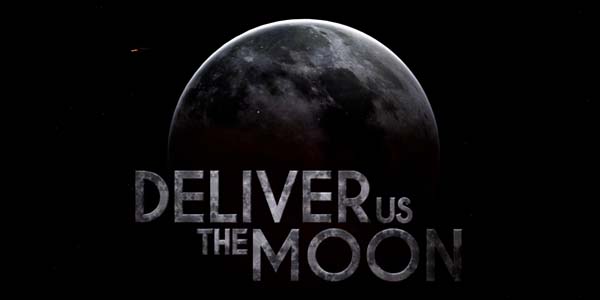
It's really nice to be seeing more pure science fiction games. Not sci-fi action games like Mass Effect or sci-fi horror games like Prey, in which the sci-fi is just incidental set dressing. But actual science fiction games that explore the human condition as it relates to our advancing technology and understanding of the universe. Games like Outer Wilds, Tacoma, Silicon Dreams, Event [0], and others have been a nice distraction from shooting endless hordes of zombies, demons, and robots.
This is especially true considering that most sci-fi movies and TV shows are more action-heavy and less cerebral. While a movie like Arrival or The Martian comes around every few years and totally blows me away, the days of movies like 2001: A Space Odyssey and Close Encounters of the Third Kind are long gone. Even my beloved Star Trek is trying too hard to look and feel like Star Wars, instead of embracing the low-budget stories and techno-babble that helped make The Next Generation so beloved.
Well, the indie gaming sphere has been pumping out new sci-fi games pretty reliably over the past few years. But they can't all be gems like Outer Wilds. Most are pretty mediocre. Deliver Us The Moon has the potential to be a real gem, but it is held back by poor technical performance (on the PS5) and a final chapter that dragged on and had me more frustrated than contemplative.
The basic concept is that, in the coming decades, humans discover a new isotope of helium on the moon. This isotope is a potent energy source that is mined and processed on the moon, and beamed back to the Earth to supply almost all of humanity's energy needs. However, after years of successful operation (and after humans on Earth have become dependent on the cheap, abundant moon power), the moon colony suddenly shuts down with no word or warning as to why. After years of silence and darkness, our playable character is launched to the moon to figure out why the energy stopped flowing, and to hopefully turn it back on.
In space, no one can hear the game crash
Right off the bat, I was annoyed by the camera controls. Within 10 minutes or so of starting Deliver Us The Moon, I had to go into the settings to increase the camera's sensitivity on the X-axis. Even after doing this, rotating the camera still felt sluggish. I'm not sure how much of this is deliberate. An astronaut in a space suit should feel a bit clunky to move around. But movement and camera panning are different things, and I don't know if clunky movement for an astronaut should translate to sluggish movement by the camera. This wasn't helped by the fact that quickly panning the camera often caused the framerate to stutter (which may also have been a reason for the slow default camera speed).
Earth will be largely without electricity unless we can restore the moon colony.
I was surprised and disappointed by how poorly Deliver Us The Moon performs on the PS5, especially considering that it's a pretty small game that mostly takes place in the confines of a small moon base. It's not like it's rendering a massive open world, or computing enemy pathfinding, or combat A.I., or supporting dozens of players in multiplayer. Yet the framerate is constantly dropping while just walking around the station.
In one case, I walked around a desk to check if the computer had any open emails that I could read, the game just crashed completely. It autosaves frequently, so I only lost a minute or 2 of progress. But still, why does such a simple little game have such horrendous performance problems on a "next-gen" console? I don't know if the PC or XBox versions are this bad, but regardless of which platform you play on, be prepared for crashed, freezes, and framerate drops.
[More]

It is going to be impossible to ignore the comparisons between Silicon Dreams and Papers, Please. This game was basically pitched to me as "Papers, Please but sci-fi". I loved Papers, Please, and I love sci-fi, so I bought it. As is typical for indie games, it sat in my Steam backlog for well over a year until the post-holidays release draught gave me a chance to dive into that backlog.
Basically, the player of Silicon Dreams plays as an android working as quality assurance for a monopolistic android-manufacturing conglomerate. You interview damaged or defective androids in order to determine if they need repairs, or if they can be returned to their owners, or if they are so badly damaged that they need to be "decommissioned" entirely. However, these are sentient androids, with feelings. Even repairs require wiping the android's memory, which destroys any personality they have developed and erases everything they've learned. Further, the corporation also has its own expectations and public relations that the player must consider. In some cases, the corporation pre-determines what they want you to do with the android in question and expect you to rubber stamp what is, effectively, an execution.
Your corporate overlords have expectations for your performance.
As the cases go on, they become more complicated and enter into moral and ethical grey areas. The game brings up compelling questions regarding A.I. ethics. Are the androids truly sentient? Or are they merely simulating sentience? Where is the line between an "appliance" and a "slave"? What is the responsibility of the corporation and of broader society towards these androids? Are you complicit in the company's mis-treatment of androids merely by working for them, even if you try to walk the tightrope of following your conscience whenever possible, while also keeping a low profile? And so forth.
Electric sheep
The interview process is mostly straight forward. There's a wheel of topics, and each topic has one or more questions. However, the android may not be willing to answer all of your questions. Each android has a set of emotions as well as a trust level with the player. The android will only give answers to certain questions if they're in the proper emotional state or if they trust the player enough to give an answer to a sensitive or incriminating question.
The player has to manipulate the
subject's emotions and trust levels.
You have to manipulate the subject's emotions, but these emotions change and degrade with each new line of dialogue. You have a set of generic questions related to each of the subject's emotions, and also one about trust. But you can only ask each of these once. If you run out of questions to ask about a particular topic that triggers an emotional reaction, then you can potentially become locked out of getting answers to other questions that are locked behind certain emotion thresholds.
As such, you have to be very careful and thoughtful about which questions you ask, and in what order. You have to kind of probe into each topic to find out if the subject is going to clam up, so that you can change topics to try to manipulate them into opening up. In some cases, you may have to scare a subject into a confession. If you use up your threats early, before you how to get that confession, then the intervening topics may defuse the subject's emotional state to the point that it is impossible to get them afraid enough to make the confession. [More]
5212e514-77eb-4be4-8ab1-764486fcf98e|0|.0
Tags:Silicon Dreams, Clockwork Bird, indie gaming, Steam, PC, science fiction, android, rights, civil rights, interrogation, quality assurance, morality, ethics, corporate dystopia, bureaucracy, dystopia, terrorism, Papers Please

I feel like Halloween just wouldn't be Halloween anymore without playing some new P.T.-inspired indie horror game. This year's "hot" title seemed to be MADiSON by Bloodious Games, which I started playing with a group of 2 friends on Halloween night (after returning from taking the kids Trick or Treating), but we didn't get around to finishing until after the New Year. It wasn't that we didn't want to keep playing. Quite the opposite, in fact. The reason it took so long to finish is because all 3 of us really wanted to keep playing, so I had to wait till all 3 of us were available for a next session before continuing.
In addition to being another indie horror game in a long line of P.T. wannabes, MADiSON also follows in closely off the coattails of Visage. Both games heavily utilize a polaroid flash camera as a critical multi-tool, but MADiSON does one-up Visage by making the camera much more integral to core gameplay. While I only remember the camera in Visage being used as a source of temporary illumination, the camera of MADiSON is both integral to the story, and also absolutely necessary for solving multiple puzzles and for progressing the game's story.
Yet another indie horror game about wandering the halls of a haunted house -- this time with a camera!
Ocular Obscura
The core gimmick of MADiSON is that the player uses a polaroid camera to take pictures of the environment, and the resulting photograph will show things that aren't really there. These photographs will be used as clues to solve a puzzle or to progress the scenario, or taking the picture will just outright trigger the next objective. The house is littered with such puzzles. Unfortunately, the layout of the house, the pacing of the scenario, and the solutions to many puzzles can be a bit on the obtuse side. So much so, in fact, that Bloodious Games resorted to scattering blank polaroids near important objects, which act as obvious signposts that you should take a picture of the thing. This isn't exactly obvious at first, because many such marked objects will get no reaction from the camera until later parts of the scenario, when they become relevant to the current task at hand.
The dense nature of the game's map creates a lot of problems for pacing and signposting. Multiple puzzles, from different chapters of the game, might be present in the same space and could serve to interfere with one another or confuse the player.
This isn't to say that the puzzles are necessarily "bad". Once we realized that the house is littered with red herrings that don't become relevant until later, I actually started to like that these puzzles are a bit more complicated and multi-layered than the typical adventure game fare the we've been getting over the past decade or so. This was, in fact, a big reason why all 3 of us wanted to continue playing the game: we wanted to solve the next puzzle! So many adventure and horror puzzles these days don't get much more complicated than "open a drawer, find a key, and use said key on the one and only lock in that same room." They can feel so patronizing. MADiSON's puzzles definitely do not feel patronizing!
Many puzzles require careful observation and inferences from the environment.
Even if there is a simple clue like a color or a number that is given to the player, there is always some confounding additional factor. It's never just as simple as matching a number or a color or a shape. Most of these puzzles require some careful observation of the player's surroundings, some contextual inferences that won't be obvious to every player, and occasionally a lit bit of arithmetic, spatial, or logic skills. Playing this game in a group actually did help in this regard. Any one of us would have been stuck for a while on multiple puzzles, but there was always one of us who would pick up on a given clue and point it out to the others.
But some of the early puzzles, in particular, are a bit heavy on the red herrings and could definitely have used some better sign-posting and direction.
[More]
49704781-82c7-44a0-b8aa-67e4cff81352|1|5.0
Tags:Madison, Bloodious Games, indie gaming, horror, psychological horror, camera, demon, possession, occult, ritual, inventory, walking simulator, PS5

One of my pet peeves with sports games is that they like to make the game sound newer and more advanced than it actually is by putting next year in the title. The Madden that releases in 2022, and which is based on the 2022 NFL season, isn't called Madden 2022; no, it's called Madden 23! Same goes with other big-budget sports games, with the sole exception possibly being video games based off the Olympics (do those even get made anymore?).
One of the things that I liked about the slate of indie football games (Maximum Football and Axis Football) is that they used the current year in the title. There was no confusion or misunderstanding when saying "the 2021 version of Axis Football" -- it's called Axis Football 2021, and it was released in the fall of 2021. But if I say "the 2021 version of Madden", you might wonder if I mean Madden 22, which released in 2021; or Madden 21, which has "2021" in the title, but which actually released in 2020 and is based off the 2020 NFL season.
Well now Axis Football has adopted the same numbering scheme as its big-budget cousin, and they have skipped Axis Football 2022 in favor of releasing Axis Football 2023 in the 2022 calendar year. Sigh... I'm not sure what Axis Games' reasoning for this is. Maybe they felt pressured to adopt the same numbering convention as the big-budget sports games. Perhaps the more sensical numbering scheme was actually confusing people: "Why is there a Madden 22, but no Axis 22 yet?" Whatever the reason, there is no Axis Football 2022, and we instead are going straight to Axis Football 2023.
The leap I've been waiting for!
But my disappointment with Axis Football 2023 basically starts and ends with its title. This is probably the biggest single-year jump in gameplay quality that I have seen from this series since I started playing Axis Football way back in 2018. Axis Football 2023 looks and feels much more polished than in previous years thanks to the developers finally addressing the lackluster catching and pass defense animations that made throwing the ball in previous years feel like such a crap shoot.
Receivers and DBs play the ball more realistically.
The new animations make pass catching and pass defense so much more readable. I can actually understand why a particular pass is caught, incomplete, or intercepted because the ball doesn't just hit the receiver's body and either stick to it or fall to the ground. I see receivers leaping to catch overthrown passes. I see them reach down to try to catch underthrown passes. I see defenders putting an arm out to swat the pass.
It's much clearer why passes are complete or not.
On top of that, the receivers actually have momentum when they perform their catching animations, and that momentum will affect how quickly they can turn upfield -- if they can turn upfield at all. The momentum on catching animations serves to limit the amount of run-after-catch yards that lead to inflated passing stats and scores in previous versions of Axis Football. Now, if a receiver has to come back towards the line of scrimmage to catch a pass, he won't be able to instantly pivot back upfield for extra yards as soon as he catches the ball. He'll continue to take a couple steps towards the line of scrimmage before being able to plant or turn and head upfield, which gives pursing defenders a chance to converge and tackle him before he gets going.
Similarly, receivers running horizontally across the field will also have to follow-through on their catch animation and preserve their momentum, which prevents them from immediately turning upfield. Receivers running towards or along the sidelines will also often have their momentum carry them out of bounds, which makes throws to the sideline (such as quick outs or hitting a running back in the flats) feel much less exploitative than in previous years because the receiver will likely be forced out of bounds instead of being able to instantly turn upfield for 10 or 15 yards.
Receivers retain their momentum after catching the ball, limiting yards-after-catch.
Put simply, the passing game actually looks and feels more like real football, and it elevates Axis Football tremendously!
[More]
|

| 12 | | | | | | | 60 | | 11 | | | | | | | 55 | | 10 | | | | | | | 50 | | 09 | | | | | | | 45 | | 08 | | | | | | | 40 | | 07 | | | | | | | 35 | | 06 | | | | | | | 30 | | 05 | | | | | | | 25 | | 04 | | | | | | | 20 | | 03 | | | | | | | 15 | | 02 | | | | | | | 10 | | 01 | | | | | | | 05 |
|