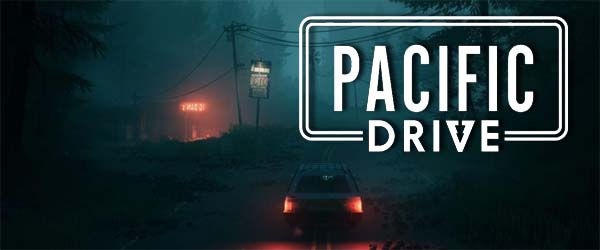
I really enjoyed Pacific Drive, but I admit that I struggled a bit in the early hours. The tutorial is decent, but it's a bit of an information overload, and the player doesn't really get much opportunity to practice certain mechanics so that they sink in.
So I wanted to share some of my tips based on the confusions and growing pains that I experienced, so that other new players can hopefully shorten the learning curve and get to enjoying the game more quickly.
[More]
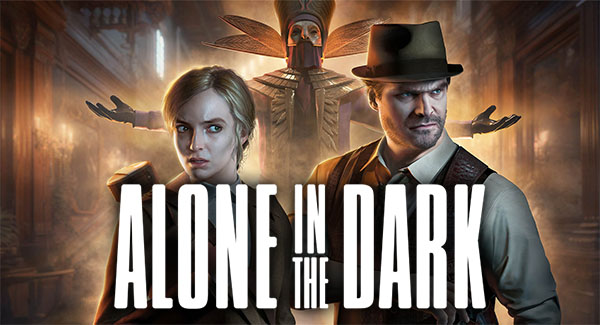
After playing the ridiculously short Prologue demo last year, I was kind of on the fence about playing Alone In The Dark -- let alone paying full retail price for it. Then I started seeing the mixed critical reviews, with some outlets giving it a 6/10, and other giving it an 85/100. I started to think that maybe I could just pass on it, and check it out later when it hits the bargain bin. Ironically, it was actually a negative review of the game that actually convinced me to buy a new copy. That review (I don't remember the review's source) said that Alone In The Dark feels old-fashioned, and that it emphasizes puzzles in favor of combat or action.
The Prologue demo (all 5 minutes of it!) did not make a good impression.
That actually made me want to play the game! Further, it encouraged me to buy a new copy, at retail, in order to support the niche genre of old-fashioned, slow-paced, puzzle-oriented survival horror, and to show that there is definitely still a market for such games. Horror games do not all have to be either over-the-shoulder shooters a la Resident Evil 2 REmake, nor P.T.-clone walking simulators that take place in residential hallways. I want to see more Eldritch survival horror games that are carried by intrigue, mystery, and genuine terror, rather than action spectacle or cliche "psychological" horror tropes. It's the same reason I bought and played Song Of Horror (which is a much better and more clever game).
The first hour or so of gameplay definitely vindicated those negative reviews. From the start, there were technical and performance problems. The framerate seemed to occasionally stutter, textures and assets would pop in, and the controls seemed a bit floaty (though better than in the Prologue demo, at least). Also, interaction prompts would disappear if I was too close to them, which made it unclear if an empty cabinet was really just an empty cabinet, or if the game was bugging out and not letting me pick up whatever happened to be inside. Other times, a button prompt would appear, but the interaction didn't actually work. And character dialogue and animation came off as unnatural and fell firmly within the uncanny valley. This is all despite the fact that I didn't get around to starting the game until a couple days after its release, and after I had already downloaded and installed a day-1 patch that was almost as big as the actual game on the disc! Good thing I had cleared out extra hard disk space on my PS5 the night before.
The Day-1 patch is almost as big as the whole game?!
I chose Emily as the character for my first playthrough, since her story of trying to find her uncle seemed like the actual story of the game, in stark contrast to the private investigator who is only even here incidentally at Emily's request. But I wasn't sure if I was getting myself into some kind of un-labeled "Hard Mode" similar to picking Chris in the original Resident Evil. I mean, I didn't even know if she would be starting the game with a gun, or if she would even be allowed to engage in combat at all. She does, and she can.
The early combat encounters sure as hell felt like I was in some kind of hard mode. Alone In The Dark loves to ambush the player with cheap shots. Heck, the very first enemy encounter in the game (playing as Emily) is a monster that jumps out at the player from behind a blind corner. It promptly pinned me into a corner and almost killed me. I guess that's one way to establish the threat that the monsters pose. It's also a great way to make the player think that the monster encounters are going to be cheap and unfair.
I was concerned by the fact that I felt like the game was overloading me with bullets and healing items right from the start. Why would I need all of this ammunition and health right from the start? Unless it is because the monsters are going to be bullet sponges that will be dealing cheap, unavoidable damage? I was getting unpleasant Callisto Protocol flashbacks.
The game would go on to ambush me a few more times during Emily's opening chapter, as well as get plenty more cheap hits and damage in. I would also go on to pick up a couple of melee weapons, only to have them break after killing a single enemy with it. When I switched to Emily's pathetic little pistol, each enemy seemed to take exactly 1 more bullet to kill than the gun could hold, meaning I had to reload during every single gun fight -- against the first enemies in the game, on the normal difficulty level.
Frequent ambushes sap health and lead to cheap deaths.
I was already starting to fear that this game would turn into much more of a painful combat slog than the reviews made it out to be.
That fear was partially justified. The game's combat just doesn't feel good, and there's far too much of it for my tastes. I've said it many times before, but I miss the good ol' days of survival horror, when deciding whether or not to even engage with a particular enemy was a strategic choice, exploration felt more open-ended, and long-term resource-management was the biggest challenge.
This game frequently forces the player to engage in combat in close quarters. At this range, aiming a firearm isn't reliable, and I repeatedly missed point-blank shots that I felt should have been gimmies. The melee weapons aren't much better. In addition to having the durability of a wet paper straw, I had trouble judging distances, and often swung the weapon wildly, missing my attacks and leaving myself exposed.
Combat gauntlets are few and far between, however. A large chunk of the game is simply exploring the Derceto manor, which is completely devoid of danger -- aside from a few scripted sequences here and there. There are long stretches of the game in which the player gets to wander around in near total safety, unlocking doors, solving puzzles, and collecting more resources for your regular trips outside the manor and into danger.
[More]
8d4b5722-ca54-4b10-b8df-ac4326b15862|17|2.1
Tags:Alone In The Dark, Pieces Interactive, THQ, THQ Nordic, horror, survival horror, cosmic horror, Derceto, Edward Carnby, Emily Hartwood, Jeremy Hartwood
I like the original The Twilight Zone TV show. I wouldn't call myself a huge mega fan or anything, but it's easily my second favorite show from the 60's. Heck, The Twilight Zone might even hold up better than the majority of original Star Trek episodes, and the show is probably more progressive too. For one thing, it isn't loaded with as much of the casual sexism and fetishization of women that keeps popping up in Star Trek.
In any case, the PSVR2 release of a Twilight Zone game kind of came out of nowhere. I saw a preview of it on my Google news feed on my phone the day before the game went on sale on PSN. Heck, the PSN didn't even have it listed as "coming soon". It didn't even show up in the store until it was released, and I immediately jumped on it and bought it.
The game is a small anthology of 3 short, original Twilight Zone stories with some contemporary themes. I was glad to see the game divided up into multiple chapters, and for these chapters to apparently be playable in any order (even though I opted to play them in order anyway). The Twilight Zone really works better as short stories like this, as the premises and twists rarely (if ever) hold up for longer stories. In fact, trying to pad some of its stories into an hour runtime or longer was one of the biggest problems with CBS and Jordan Peele's recent reboot.
You are about to enter The Twilight Zone.
As a tiny nitpick, I will say that I don't understand why Pocket Money chose to use the term "chapters" instead of "episodes"? The use of the word "chapter" implies a small section of a larger story, with that small section not being a story in itself; while the word "episode" would imply self-contained stories that may relate to or follow one another, but which have their own beginning, middle, and end that does not necessarily depend on the other episodes. Yes, all 3 chapters do refer to one another, and seem to take place in the same continuity, and one of them kind of acts as a prequel to another. Regardless of those connections, each chapter is a completely independent, self-contained story that does not at all rely on the events of the other chapters in order to understand what is happening. You can play these chapters in any order, or play any one of them without playing the others, and it wouldn't make any difference to the perception or interpretation of the stories. And in fact, the game is perfectly willing to let the player play them in any order.
Each of this game's chapters takes about 30 minutes to an hour to play, and the whole game should be playable in 2 hours (give or take). Any of the chapters may take longer depending on how many times you might have to repeat some of its more tedious stealth or shooting sections. So these little VR stories hit the sweet spot in terms of length, and they don't over-complicate their gameplay such that it distracts from the story being told. In terms of story-telling, Pocket Money Games puts up a really solid product here. The actual game, however, is a lot less solid. [More]
a711b255-3f32-4e5e-b356-482f206f06b9|8|4.0
Tags:The Twilight Zone, The Twilight Zone VR, PSVR2, virtual reality, horror, science fiction, Pocket Money Games, Fun Train, Rod Serling, Kiff VandenHeuvel, corporate culture, crunch, video game, post-apocalypse, alien, abduction
When I first saw the trailers for Pacific Drive, it was being pitched as a survival horror that takes place entirely in a car. Or at least, that was my takeaway from the initial announcements and teasers. It had me intrigued, such that I immediately wishlisted the game. However, that isn't quite what the game ended up being. Instead, Pacific Drive is more of a survival/crafting/extraction game with light-to-moderate horror elements. There's also an emphasis on logging and cataloguing everything you encounter, which nullifies much of the horror and mystery that it could have, in favor of encouraging exploration and curiosity.
The bulk of the gameplay consists of driving to different parts of the map, scavenging for materials and supplies, and using those materials to craft upgrades for your possessed station wagon. And all the while, you're scanning almost everything you encounter in order to catalogue it (from paranormal phenomena, to resources and equipment, to the different types of wrecked vehicles you find rusting along the roadside, and everything in between). Maybe I misunderstood those initial announcements and teasers. Whether I misunderstood, or the game's concept was poorly communicated, or its design simply shifted over the course of the intervening year or so (which happens), the final game errs much closer to No Man's Sky than to Resident Evil, and might even have tiny hints of inspiration from things like Outer Wilds and Portal.
The crafting focus also means that the gameplay is split almost evenly between driving and scavenging on foot. I'm constantly getting out of the car to search an abandoned building for materials, or using the various tools to break down other wrecked vehicles for their constituent parts. So the idea that the game would be played entirely from within the car also ended up not being the case. In fact, a majority of my opening hours of the game were played on foot, since so much of the early game is a series of tutorials on how to craft various tools and car parts.
Pacific Drive can be serene and beautiful, and almost zen-like.
So Pacific Drive takes a while to really get going. Whether it's the sub-genre-defining horror game that I anticipated, or a more trendy survival/crafting/extraction game with a driving gimmick, Pacific Drive still turned out to be quite good and addicting. In fact, the survival and extraction focus might even have made it a better game than what I was envisioning in my own mind.
Grab 'n' Go
Pacific Drive's core gameplay loop is more akin to an extraction shooter, except that it's single-player PvE (Player vs Environment), and the player uses a possessed, beat-up old station wagon as your primary method of locomotion and eventual escape. You choose an area from a map menu, and the specific details of the area are pseudo-randomized each time you enter (and can change if you return later). You drive around the area, collecting any resources or materials you find, avoiding paranormal hazards, and occasionally finding documents or audio logs that slowly explain what happened to the Olympic Peninsula Exclusion Zone.
But there's also a ticking clock, and this is where the "extraction shooter" influence appears. If you lollygag too long, meticulously avoiding obstacles, and gingerly collecting everything that isn't nailed down, a blaring siren will sound, and a mysterious Fortnite-esque "storm" will slowly engulf the area. If you get caught in the storm, you'll slowly take damage until you either escape or die. And the only way to escape is usually to trigger a warp portal that appears somewhere on the map. These portals can only be activated if you're more than a certain distance away, and once activated, the storm starts to rapidly expand. You have only minutes to drive halfway across the map to the portal and escape, with the storm breathing down your neck.
Each voyage is punctuated by a frantic race to a gateway portal.
[More]
7a4a2b03-cfb0-42a5-88af-2605cfaebb55|6|3.7
Tags:Pacific Drive, Ironwood Studios, Kepler Interactive, car, driving, crafting, survival, horror, extraction, Pacific Northwest, ARDA, science, anomaly, garage, road, forest
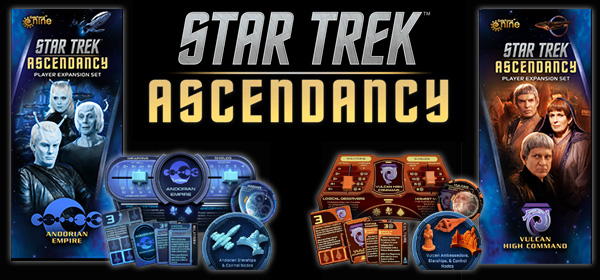
Star Trek: Ascendancy must be a more popular game than I thought. Usually I think of Star Trek games as being pretty niche and unlikely to find widespread success. But Ascendancy must be doing well because 8 years later, Gale Force 9 is still pumping out expansion packs and new accessories. Ascendancy deserves it. It's a fantastic game! In fact, it might very well be my favorite tabletop game at the moment.
The Vulcan and Andorian expansions were both released a few years ago, in 2019. But I couldn't review them near their release because I hadn't had an opportunity to play either of them until this past year or so. That's partly due to the fact that Gale Force 9's distribution isn't the best. The expansions were delayed several times, and my pre-orders were also late arriving. By the time I finally had them both, schedules just weren't favorable for playing. I had an opportunity to play with either faction within a few months of purchasing them, but we ended up sticking with the Ferengi and Cardassians.
We expected to play again soon and break in the Andorian and Vulcan sets, but then COVID happened. Ascendancy wasn't the only victim, as several other games (including Bloodborne, Tapestry, and U-Boot) have also sat un-opened or un-played since the summer of 2019.
Several games (or expansions) have sat un-opened or un-played since 2019 and 2021 thanks to COVID.
Now, GF9 has released another pair of expansions in 2022, with the Dominion War and Breen. This time, I didn't want to wait and risk letting them sit un-played for another 2 or 3 years, so we made sure to find time to play. Though reviews were still very late because I had 4 expansions to play and review instead of just 2. Which means it took quite a few play sessions to play everything and get a decent feel for it all.
It certainly helped that I introduced the game to some new players in the year or 2 following COVID, and they all loved it. I've now played with all the new factions and have impressions on all of them. I'll discuss the Dominion in a separate post, since the Dominion is a lot more complicated than simply being a new faction. It includes new rules for the Bajoran wormhole, Gamma Quadrant systems, and also includes a team variant game mode based on the Dominion War of Deep Space Nine. So for now, I'm going to cover the Andorians, Vulcans, and Breen.
Pre-Federation factions
The pair of 2019 expansions were both themed around Star Trek: Enterprise, offering versions of Federation-member cultures that represent their pre-Federation empires. I have to say, I was very surprised to see these factions be announced. Partly because they are both members of the Federation, and so don't seem like "big enough" galactic powers to warrant their own factions. To me, it seemed comparable to seeing the Virginia Commonwealth or Republic of Texas show up as a playable civilization in Sid Meier's Civilization.
But it was also a confounding release because I was expecting to see the Tholian faction that was promised by the base game's "Crystalline Entity" exploration card. I would have expected to see factions like the Dominion, Tholian, Gorn, or maybe even a Delta Quadrant faction like the Hirogen or Kazon, before seeing the Vulcans and Andorians show up as factions. Nevertheless, both introduce novel new gameplay mechanics and concepts, and show the development team at Gale Force 9 is getting quite creative with its faction concepts. [More]
c8602238-1f38-43f7-b62e-db5a7d8d9a68|0|.0
Tags:Star Trek, Star Trek: Ascendancy, Gale Force Nine, board game, expansion, Vulcan, Andorian, Breen, Dominion, lie, ambassador, research, isolationist
|

| 12 | | | | | | | 60 | | 11 | | | | | | | 55 | | 10 | | | | | | | 50 | | 09 | | | | | | | 45 | | 08 | | | | | | | 40 | | 07 | | | | | | | 35 | | 06 | | | | | | | 30 | | 05 | | | | | | | 25 | | 04 | | | | | | | 20 | | 03 | | | | | | | 15 | | 02 | | | | | | | 10 | | 01 | | | | | | | 05 |
|