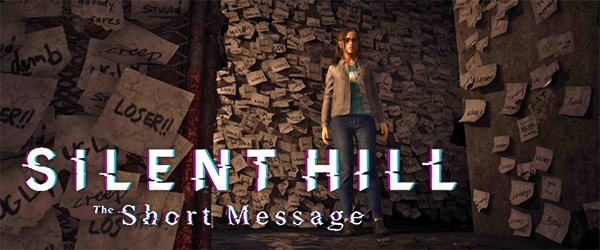
Silent Hill: The Short Message is a first-person horror game about wandering through looping, decrepit hallways in an abandoned apartment building, while confronting a secret, repressed guilt. And stop me if you've heard any of this before.
Silent Hill used to be a series that innovated, that pushed the envelope. The first game basically introduced the video-game-playing public to the concept of psychological horror. The second polished the formula to introspective perfection, while also providing a template for a plot twist that would be repeated in (what feels like) every horror game since -- at least the ones not named Resident Evil. Even action-oriented games like Dead Space ripped off Silent Hill 2.
Silent Hill 3 introduced gamers to a teenage girl protagonist who actually felt like a real person, instead of being a hyper-sexualized "boob ninja" in a bikini or skin-tight catsuit, while also providing jaw-dropping technical accomplishments. The moving, bleeding, living environmental textures of Silent Hill 3's Otherworld amazing and un-precedented at the time. And it's character models and lighting looked better than many games that would be released on the following generation of consoles.
Hideo Kojima's playable teaser P.T. spawned a cohort of horror games ripping off the formula of first-person looping hallway horrors, of which The Short Message is only the latest example. And heck, even P.T. was really only popularizing horror conventions that Silent Hill 4 had already started experimenting with a decade earlier.
This is a blunt and earnest depiction of teen depression, self-harm, and suicide.
The Short Message, on the other hand, is largely a retreading of horror gaming tropes that are quickly becoming tired and stale. The looping hallways were mind-blowing back when P.T. did it -- ten years ago. But I've seen it in seemingly every horror game since, from Layers of Fear to Visage to MadIson.
It isn't just general horror trends that The Short Message is retreading either. It's also invoking well-worn and frustrating habits that the Silent Hill series just refused to break in its never-ending quest to recreate the lightning-in-a-bottle that was Silent Hill 2. The character's repressed guilt being hidden from the player and revealed as a mid or late-game plot twist? Check. The person you're looking for being dead already? Check. Silent Hill acting as a purgatory that seems to be willfully trapping people until they confront and overcome aforementioned guilt? Check.
The heaviest, bluntest hammer Konami could find
One thing that The Short Message doesn't bother to copy from its ancestors is the subtlety and nuance that Silent Hill used to be famous for. The Short Message is unbelievably heavy-handed, blunt, and melo-dramatic. This is owing, in large part, to trepidation from Konami and/or developer HexaDrive about how to depict the game's subject matter: teen depression, self-harm, and suicide. It's a touchy subject, for sure. One has to give credit to Konami and HexaDrive for so directly addressing an issue that most game publishers and developers won't touch with a 20-foot pole.
HexaDrive's depiction of mental illness is not
as hopeless and fatalistic as Bloober's.
But this is also where The Short Message lands on one of its greatest strengths. It's blunt depiction of teen suicide is at least a hopeful and optimistic one -- one that is also grounded based on the very real social and technological issues that often motivate or catalyze real-life self-harm and suicide by actual teenagers. And this is not something that we should overlook in discussion of The Short Message. It's almost the polar opposite of how Team Bloober (the company that is developing the Silent Hill 2 remake) has historically treated the same topic. Bloober has always shown abuse victims as totally, fundamentally broken individuals for whom death or suicide is a welcome release that spares the world from their burden.
In contrast to Bloober, The Short Message wants depressed teens to know that they are not broken, that they can get help, and that there are people out there who care about them and would miss them and would be there for them in their times of need. The Short Message wants people to know that recognizing the red flags, and talking to the person can save their life, and that, for the depressed individual, things will get better.
If nothing else, The Short Message has its heart in the right place.
And let's face it, teenagers aren't exactly known for subtlety or nuance. Teenagers do tend to blow things out of proportion and be melo-dramatic. So it's hard for me to hold The Short Message's overly-blunt and melo-dramatic dialogue against it. Yeah it's cringe-worthy at times, but it's cringey in exactly the way that real-life teenagers are often cringey. There might also be more intentionality behind the blunt, cringey dialogue than is apparent at the surface level. Does the heavy-handed and cringey dialogue represent the literal events as they actually happened? Or are we seeing the world as the teenage character sees it? [More]
07ee844a-4982-4339-8a3d-c2ea2b7ed59f|2|5.0
Tags:Silent Hill, Silent Hill: The Short Message, Konami, HexaDrive, Masahiro Ito, Akira Yamaoka, teenager, suicide, bullying, social media, abuse, neglect, COVID-19, Kettenstadt, Germany, Silent Hill Phenomenon
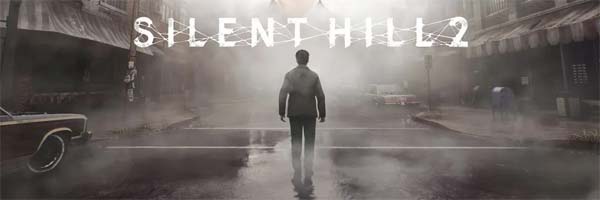
By the time you read this, the remake of Silent Hill 2, being developed by Bloober, is less than 2 months from its expected release. So nothing I write here can possibly change the game. But there has been something that has been nagging at the back of my brain ever since the first trailer for the remake released. Since most of the concern about Bloober's Silent Hill 2 is focused on their historically awful depictions of mental health and trauma, I haven't seen a whole lot of content addressed at this particular concern of mine. So I thought I'd share my thoughts.
First and foremost, I will be discussing the story and ending of the original Silent Hill 2, as well as speculation regarding whether Bloober will change this ending, or somehow botch its execution. As far as I'm concerned, the announcement trailer has already shown that it will be one or the other: a changed ending, or a botched ending. But in any case, if you haven't played Silent Hill 2 before and don't want to be spoiled, then don't read this post. You've been warned.
The announcement trailer for Silent Hill 2: Remake.
Before moving on, feel free to check out the announcement trailer in its entirety, above. You can also watch this complete analysis in video essay format on YouTube.
This entire analysis is also available in video essay format on YouTube.
The original opening
For anyone still here after the spoiler warning, let's talk a little bit about the opening scene of Silent Hill 2, how it relates to the game's ending(s), how this same scene is depicted in the remake trailer, and what the changes to that scene mean for the ending. Silent Hill 2 opens as such:
A mostly calm and collected James Sunderland stares at himself in a dirty bathroom mirror, taking a deep breath, and then walking out to a scenic overlook to explain the premise of the game. He got a letter from his wife, who died of a terminal illness 3 years ago. The letter says that she's alive and waiting for him in Silent Hill. He knows it can't possibly be true, but if there's any chance that she is somehow still alive, he has to know.
This opening shows us a James who is supposedly 3 years removed from the death of his wife. He isn't necessarily grieving any more, but doesn't seem to have completely moved on; otherwise, why be here? Regardless, he is completely surprised by this letter and in disbelief. This is a subtle, subdued opening that gives the player little reason not to take this all at face value. And it goes on to follow this up with a slow-burn opening act to the game, in which James strolls casually through a wooded path along the lake and doesn't encounter anything overtly scary or threatening for a good 20 or 30 minutes, depending on the pace that the player is going.
The original is subdued and gives little reason to not take the premise at face value.
This puts the player in the same headspace as James. We are just as confused, surprised, and curious as him, but with that nagging certainty that all must not be as it seems. This allows the player to role play as James in good faith and sets up the game's eventual twist, and also sets a relatively clean slate for the various ending triggers. The player doesn't see James as anything other than a confused husband, desperately hoping to see his possibly-not-dead wife again. The player is able to play James as such, and how you role play as James will inform how he eventually deals with the game's twist revelation. But the game will be slowly pulling the rug out from under James and the player over the course of the game, gradually establishing him as an un-reliable narrator.
Considering the additional context that this is a sequel to Silent Hill (which was about a father trying to rescue his daughter from a demonic cult), players may have had even less reason to not trust James. They have no clue that this game is going to deviate from the first game's premise and be an introspective and metaphorical tale that is almost completely divorced from the first game's plot. They just know it has the number 2 in the title, so it probably follows from the story of its predecessor. Maybe Mary really is alive? Maybe she's another vessel for the cult's demon god? Or maybe her soul was also split and there's a psychic Mary doppelganger living in Silent Hill who is summoning James to help her stop the cult's plans? Or maybe that doppelganger wants to trick him into helping the cult? And hey, guess what? A few hours into the game, we do indeed meet a Mary doppelganger!
Based on the opening minutes of the game, Silent Hill 2 can go in a lot of potential different directions, either introspective, supernatural, cult-driven, or any combination thereof.
[More]
The rumors regarding new Silent Hill games are true. Well, some of them anyway. It doesn't look like Hideo Kojima or Guillermo del Torro will have anything to do with any of it. Konami finally broke the silence regarding its plans for the Silent Hill franchise, and announced 4 new games and a new movie! I have very mixed feelings about all of this.
Market saturation
First and foremost, announcing 4 new game projects all at once feels like overkill to me. I really hope that these games are spaced out and aren't all released at the same time or in quick succession. Remember the last time Konami tried releasing a bunch of new Silent Hill content in its 2012 "Month of Madness"? Yeah, that didn't go over too well.
I'm having enough trouble keeping up with the oversaturation of streaming Franchise TV series.
More generally, keeping up with the oversaturation of content from franchises like Star Trek, Star Wars, Marvel is already difficult, and I can't keep up. I don't need all my favorite video game franchises piling onto that oversaturation. People have lives outside of media consumption, and I'm sick to death of these corporations thinking that they have a right to monopolize our time by throwing dart after dart at walls in the hopes that some particular dart sticks in the bullseye. I do not owe Disney, or CBS/Paramount, or Konami any of my time, and I've gotten to the point that I don't offer my time unless I have an expectation that it will be worth it. So if any of these Silent Hill games does not look worth my time, I won't play them, and they can go in the pile of un-consumed content along with Book of Memories and most of the crappy graphic novels and comics.
That being said, I'm expecting that most (if not all) of these titles will be relatively short, niche horror games -- "short" compared to the massive open world grind-a-thons that other studios keep trying to shove down our throats. I don't expect any of these new Silent Hill games to be 100+ hour, open world, live service games that are designed explicitly to waste my time and try to steer me towards buying "time-saver" micro-transactions and loot boxes. That doesn't mean that Konami won't find a way to put micro-transactions and loot boxes into the games. But I expect these games will likely be more traditional, conservative 8 to 15-hour horror campaigns. This means that I will likely have time to split between these games and other games, and also between these games and each other (should they all be released contemporaneously, and I chose to play them all).
[More]
f6bc067e-bcf1-42c2-8f30-f2175fb6cceb|3|5.0
Tags:Konami, Silent Hill, Silent Hill 2, Silent Hill 2 Remake, Silent Hill f, Silent Hill Ascension, Silent Hill Townfall, Return To Silent Hill, Bloober Team, NeoBards, No Code, Annapurna Interactive, Masahiro Ito, Akira Yamaoka, Christoph Gans
It seems we can't go a year without new rumors of Konami resurrecting the Silent Hill franchise. Frankly, I'm getting really weary of it all.
Last year, Kojima rumors resurfaced (despite seeming exceedingly far-fetched), and the rumor-mill also postulated that Konami was bringing back some of the original game's creative team for a reboot or remake. Well over a year later, there hasn't been any formal announcement on either of those rumors, so I'm assuming that they were never more than rumors.
This Tweet activated the rumor mill.
However, the rumor mill has been churning once again this year. A cryptic trailer and social media post last month for a game called Abandoned made people speculate that Abandoned might be a codename for a new Silent Hill project, and that its developer, Blue Box Game Studio might be another fake Kojima studio (because the internet just won't let the Kojima-Silent Hill rumors die). Remember that Metal Gear Solid V and P.T. were original teased as being indie games from Moby Dick Studios and 7780s, respectively.
But no, Blue Box is a real indie game studio, headed by a real developer named Hasan Kahraman, who is not Hideo Kojima. So no, Blue Box's PS5-exclusive Abandoned is almost certainly not a Silent Hill game in disguise. At least, not an official one with the support of Konami.
So that's it, right? This year's Silent Hill rumor has been squashed, right?
Apparently not.
Konami and Bloober are working together.
In just a matter of days after the Blue Box rumors were debunked, Konami went and announced a "strategic partnership" with Bloober Team. Bloober Team is, of course, the studio behind some of the most popular indie horror games of recent memory, including the Layers Of Fear games, Observer_, and Blair Witch. But it was their most recent game, The Medium, that caught the attention of Silent Hill fans. The Medium features a novel split-screen mechanic in which the player character can be navigating and solving puzzles in two parallel realities at the same time. One reality is a decaying, nightmarish version of the other abandoned and decrepit "real world". And just like with Stranger Things, the mere existence of a nightmarish alternate version of the same place made people start saying that "it's exactly like Silent Hill" (even though it isn't), and got fanboys insisting that Bloober Team should be contracted by Konami to develop a Silent Hill game.
The announced partnership already has everyone assuming that Bloober will be making a Silent Hill game. Even though the Silent Hill rumor is still just a rumor, this is the first time in all these years since Kojima's ousting from Konami and Silent Hills' cancellation, that the rumor actually seems credible. After all, there was an official announcement from Konami and Bloober this time around. And what other famous horror IP does Konami have, other than Silent Hill? [More]
Could there be good news on the horizon for Konami's flagship franchises?
Last week, I started seeing an increasing number of websites, videos, and social media posts reporting on several new rumors regarding the Silent Hill, Metal Gear Solid, and Castlevania franchises, which currently are owned by Konami. Konami famously destroyed its credibility as a video game publisher a few years ago when its management had a public feud with Hideo Kojima that resulted in Kojima leaving the company, and the cancellation of the much-hyped Silent Hills game that was teased by the viral P.T. demo exclusive to PS4. Konami then went on to release critical and financial duds in Metal Gear: Survive and Contra: Rogue Corps, and further hindered its public perception among fans of its prestigious video game franchises by releasing a glut of slot and pachinko machines based on the IPs.
It seemed that beloved franchises like Metal Gear, Silent Hill, Castlevania, and Contra were doomed to a slow and painful death at the hands of Konami's ineptitude.
Team Silent back for a reboot?

Rumors started surfacing earlier this year that Konami is working on one or two new entries in the Silent Hill franchise. My initial reaction was that Konami had butchered Metal Gear and Contra with shit games over the last two years, so it was Silent Hill's turn to be dragged through the mud. Castlevania would probably be on deck for the next trainwreck. I took the rumors of new Silent Hill games as unmitigated bad news, expecting to see something along the lines of Silent Hill: Book of Memories and Metal Gear: Survive. However, over the past couple weeks, new rumors have been spreading that have opened up the far-fetched possibility that a new Silent Hill game might not be disastrous after all.
First up was the rumor that Konami might be inviting some of the creative leads from the original Silent Hill game to design and develop a reboot of the original, or a soft reboot of the series as a whole. It started out with rumors that original creature designer Masahiro Ito would be working on a new Silent Hill game, and has since extended to the inclusion of Keiichiro Toyama and Akira Yamaoka (the original director of Silent Hill, and the series long-time music composer and sound director, respectively). The latest rumors suggest that this trio (and possibly more original Team Silent members) are working on a next-gen reboot of the series.
... [More]
9ec5d81e-b242-4ab8-bac6-1b5bce16f1b1|2|4.5
Tags:Silent Hill, Metal Gear, Metal Gear Solid, Castlevania, Konami, Sony, Hideo Kojima, Kojima Productions, P.T., Silent Hills, Metal Gear: Survive, Contra: Rogue Corps
|

| 12 | | | | | | | 60 | | 11 | | | | | | | 55 | | 10 | | | | | | | 50 | | 09 | | | | | | | 45 | | 08 | | | | | | | 40 | | 07 | | | | | | | 35 | | 06 | | | | | | | 30 | | 05 | | | | | | | 25 | | 04 | | | | | | | 20 | | 03 | | | | | | | 15 | | 02 | | | | | | | 10 | | 01 | | | | | | | 05 |
|